Unlock this article, live events, and more with a subscription!
Already a subscriber? Log In
Chris Correia has spent a lifetime involved with music and the marching arts as his parents marched and met in the Rhode Island Matadors and helped perpetuate a lifetime involved in the activity. Chris' teaching career has involved the Generations of RI, Spartans of NH, San Francisco Renegades, and the Salem Blue Devils (WGI) among many others. Currently Chris is the Percussion Director and Assistant Band Director for the Acton-Boxborough Senior and Junior High Schools, as well as serving as an adjudicator for the Massachusetts Judges Association
The final brass chords and percussive tag draws a show to the conclusion with a flourish of color.
Lock into the final set, a flash of horns down, sticks down, the color guard in perfect pose and posture as thousands of fans stand in unison, screaming and applauding as they had just witnessed one of the most exciting and fulfilling moments of their lives.
The members of the corps, physically and emotionally drained, drenched in sweat, filled with adrenaline, barely able to make out any kind of detail other than the thunderous applause coming from a sea of humanity staring right at them also taking part in one of the most exciting and fulfilling moments in their own lives.
With barely a moment to take in accolades from the cheering crowd the command is given and the corps retreats off the field to allow for the next part of the event to continue. Members move with pride and purpose, representing their colors, their city, and their corps.
Outside of the stadium the corps circles up, rallying around each other, congratulating each other, and picking up members who felt they could have had a better show. They get called to attention and are dismissed to then move onto their next task.
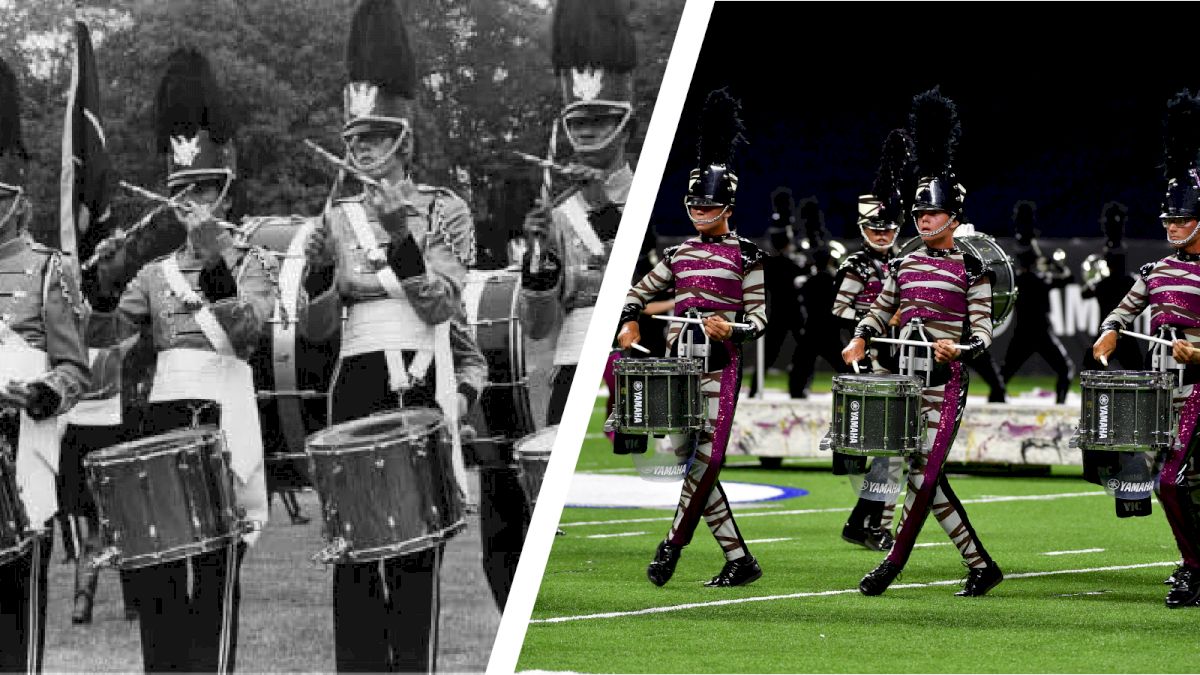
This article series aims to take a fond look back to the trails blazed and innovations forged in the past which have been fortified and perfected across the generations, realizing the mastery and limitless pursuit of the future by hearing from those whose participation and contributions have transcended the generations of the marching activity.
A Future Forged
One could look back a hundred years, or look today, and the above statement could apply to any member of any drum and bugle corps in that timeframe.
Is it innate, an instinctive impulse, or any kind of reflex for an athlete to thirst for the knowledge of the history of their sport? Is this notion something that is instilled by a coach, a teacher, an instructor as part of the learning process? Does this matter to the athlete’s overall performance, or is it all anecdotal as the athlete only cares about the "here" and the "now" to achieve the highest level?
We know that a musician, whether they be novice or professional, is always surrounded by the masters of the past through rigorous hours of instruction and emulation. Mozart, Beethoven, and Brahms transcend instrumentation and are regarded as masters of their craft to still be relied upon for study of theory and form.
Does this historical roadmap only work to serve the musician in preparation for an audition, a recital, a large public performance? Or does this historical context bring the musician closer to the living and breathing soul of the master?
Does the modern dancer study as the musician does and gain theory from the likes of Graham, Tharp, and Ailey to then only apply the concepts that they brought forth into the execution of steps? Or does the passion and pain of their masters transcend line and form in the modern dancer to propel them into a level of mastery only a precious few can achieve?
By The Pageantry Of The Past
In the year 1919 it would have been the wildest dream for a corps member, instructor, director, or volunteer to imagine that the basic military maneuvers—which were augmented by patriotic and field manual musical calls on straight military issued instruments while wearing uniforms which represented their Veterans Organization, Church, or Scouting Troop—could all evolve into the majestic, iconic, sounds and stunning visual mastery of the activity we all know today.
Imagine as you walk through the staging areas behind a modern drum and bugle corps event, counting the buses, semi-tractor trailers, seeing the production elements and equipment pulled off trucks onto the parking lot for assembly. One hundred years ago there were much more humble means of acquiring the tools and talent to perform on the same type stage, feeling the same scope of accomplishment and victory of the day, transcending generations to the present form of the activity.
The Setting
Every year the DCI tour rolls across America stopping in some cities rich in the history of contests that date back 50, 60, even 70 years, and into some cities whose histories of hosting events are much more fresh, spearheading the new classic showcases.
The cities with rich histories of being an annual stop on the tour, featuring a fan base with their own wide range of age and experience within the activity. Often times in these venues do you see entire sections septa and octogenarians donning satin jackets, representing an age that is long gone in the history of Americana, yet which is still very alive in their hearts. Frequently, you will notice the local residents in the surrounding neighborhoods out on their porches and front lawns to view this giant traveling musical circus rolling into their home—sometimes to invite sections onto their lawns to warm up, fulfilling their own annual ritual of witnessing this amazing array of talent which leaves town as quickly as it came in.
The newer locales have their own breed of excited fans, which perhaps had a drum corps in their town where they grew up, but, as life sometimes goes, it became lost in the shuffle and now is their time to become reacquainted with their old love. The alumni who are represented at these shows perhaps represent a younger generation of marchers wearing their more stylized and streamlined corps jackets with as much pride as their predecessors. There could even be more of a presence of full local scholastic bands with membership in attendance to watch their friends or just to take in the activity that they revere and emulate, perhaps hoping to one day participate in.
The magic which is created in this setting has the power to do an incredible thing: to push an organization, to give fans a purpose, to provide a place for a performer to learn and thrive, to give a former marching member a chance to reconnect with their past, to fill a young child with the dreams of wanting to be a part of this magic.