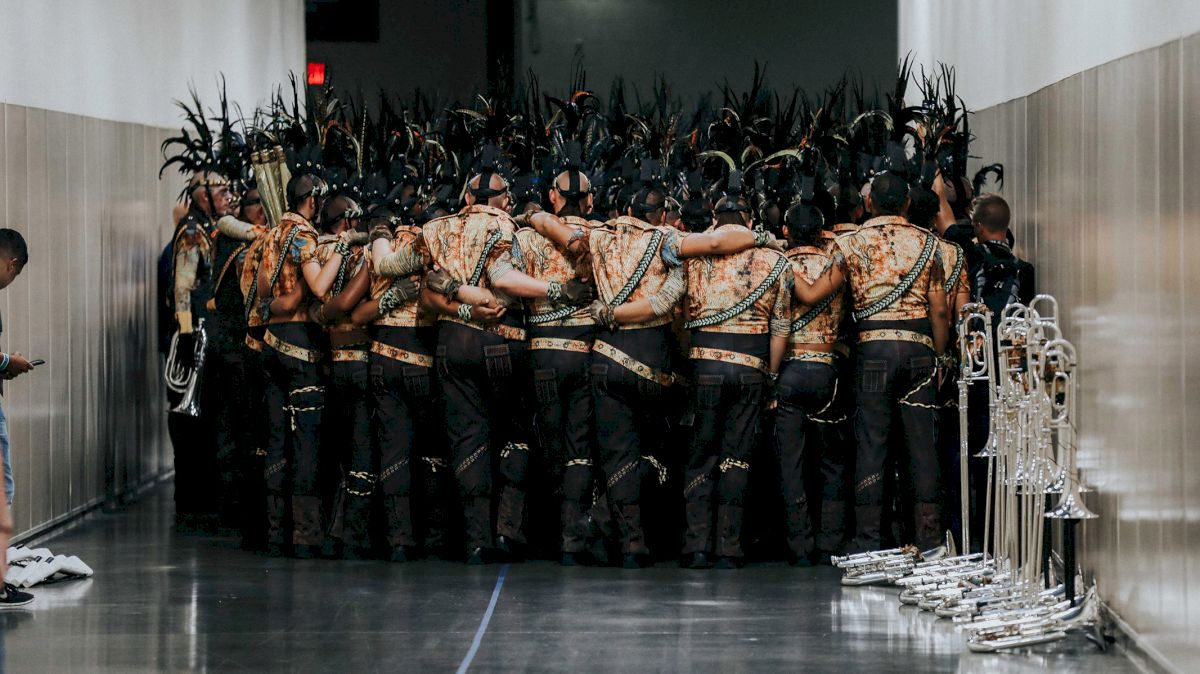
Last year during college bowl season, a major sports personality asked the question of why marching bands exist. On New Year’s Day, during one of the most coveted marching band events, the Rose Bowl Parade, famed baseball writer Bill James tweeted this in regard to marching bands:
Does the world really need marching bands? I know I am trouble for even asking this question, but what do you think?
— Bill James Online (@billjamesonline) January 2, 2018
In one of his responses shortly after, James went on to say:
I respect their work. I just think I would respect it more if they worked on something more worthwhile.
— Bill James Online (@billjamesonline) January 2, 2018
Having marched all four years of high school, four years of drum corps, and three years of college band, I will say that unequivocally, yes, marching band is needed and is absolutely worth the time.
Governing bodies such as Drum Corps International (DCI), Winter Guard International (WGI), and Bands of America (BOA) have given millions of youth, worldwide, the opportunity to march and compete. More importantly is the educational factor that these organizations bring to the student athletes.
All told over 750,000 fans attend marching contests year-round and over 150,000 performers from 15-plus countries compete for a variety of championships. Some of those participants are as young as 12.
Impact On Youth
Most sports’ “worthiness” are defined by their impact on the youth who participate. Pee-wee football leagues, baseball little leagues, and so on are seen as having positive impacts based on the life skills, mentoring, and physical activity that these sports give to young athletes.
Let’s apply that same thought process to marching.
Teamwork, perseverance, commitment, and leadership are all life skills that are gained by participating in marching... just like traditional sports.
Mentoring is an enormous part of the marching community. Band directors and percussion and guard instructors have an overwhelming impact on their students. Just ask any marching member who their most influential teacher was — they’ll most likely single out their band director.
Physical activity is the one sticking point that traditional sports writers and fans look at marching and say, “It’s not a sport.”
I beg to differ.
Personally speaking, after every summer of drum corps I was 25-30 pound leaner, was capable of running miles without being winded, and was in the best shape of my life. But we’ll let DCI’s own video put that personal anecdote to the test.
Largest Team Sport In The World
Marching provides a unique experience for participants to be a part of the largest team sport in the world.
Name any other sport in which there are 100-plus members on the field at the same time, working toward the same goal. Baseball only fields nine defenders, and only 1-4 offensive players at any given time. Football only puts out 11 offensive and 11 defensive players.
If you want to get into the debate of “Well, there are no defenders.” OK, here’s a few other examples.
Gymnastics, diving, skiing, snowboarding, and figure skating are just some of the sports that are awarded Olympic medals. None of those have defenders. All feature athletes who train to execute their craft at the highest level possible to score points… just the same as marching.
Then let’s talk about playbooks versus drill books. A typical collegiate playbook may have over 100 plays. Of those plays, a wide receiver will most likely learn about 9-10 different routes for that position.
It’s not uncommon for a single drum corps ensemble to have 150-200 sets per show. To create the forms the band displays on the field, each band member must hit his or her set, and each set requires hitting a particular spot on the field at a certain point in time while taking an exact number of steps.
So if you have 150 members required to hit 150 sets, that is 22,500 sets for a 12-minute show. Now that’s a playbook.
It’s All About Perspective
Ultimately, the impact of the activity is defined by the marching community and its love of the sport.
Take a trip to DCI World Championships (August), WGI World Championships (April), or BOA’s Grand Nationals (November) and watch the pageantry for yourself.
Millions of non-band viewers will watch the 30-second clips of marching bands at the bowl games and assume that is the pinnacle of marching. That’s just the tip of the iceberg.
I invite anyone and everyone to come see what the marching arts is really about. Come hang out at a rehearsal. See what a breathing block looks like and tell me these aren’t athletes. Watch band directors teach a 14-year-old 100 sets plus eight minutes' worth of music and tell me they aren’t valuable. Then watch at finals as thousands of performers pour their hearts and souls into their show. They don’t do it for the chance to get drafted, or for millions of dollars in guaranteed contracts, or for the fame.
They do it because they love it. That’s why we need the marching arts.